
Grant County Arrest Records Pathway
Grant County arrest records can begin with the Sheriff's Office, municipal police, New Mexico State Police, or another law-enforcement agency. If a person is held locally, the booking side may involve the Grant County Detention Center. The court side begins or develops when a charge is filed in Magistrate Court, District Court, or a municipal court. That split matters because a jail roster can show arrest and custody facts while the court record shows the formal charge path, hearings, disposition, and sentence.
The county-linked and vendor custody tools described in the research do not replace court charge records. The 365Labs inmate-list portal markup showed fields for name, booking number, booking date, address, charges, statute, agency, docket or case-related fields, bond number, and bond amount. It also had Google reCAPTCHA, so no live inmate profile was opened. The court charge record is the better path for checking what was filed after the arrest and whether the charge changed. The full case outcome belongs in Grant County criminal court records.
The Grant County Sheriff's Office page identifies Sheriff Raul D. Villanueva, dispatch, and public safety contact channels tied to arrest and law-enforcement records.
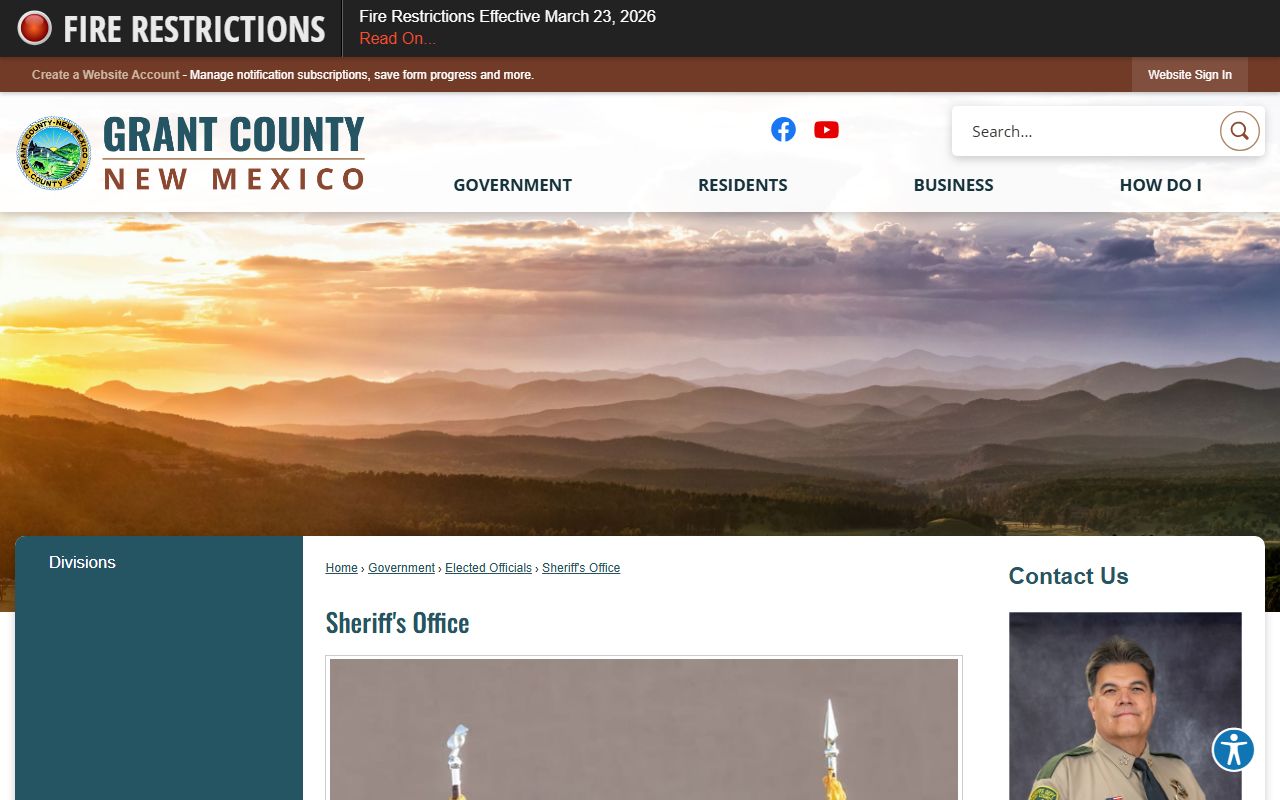
Sheriff records, detention records, and court charge records each have a different custodian, so the source must match the record being requested.
Charges After Arrest in Grant County
Charges after arrest may be listed first by an arresting or citing agency, but those initial labels do not prove final prosecution. The Sixth Judicial District Attorney serves Grant, Luna, and Hidalgo Counties and is part of the felony and criminal filing path. Prosecutors evaluate many criminal matters for formal prosecution. Law enforcement may also file complaints or citations, and municipal prosecutors or courts handle local ordinance and petty misdemeanor cases in Bayard, Hurley, Santa Clara, and Silver City.
Grant County charge routing depends on the court level. District Court handles felony prosecution and sentencing once a felony case is filed or bound over. Magistrate Court handles misdemeanors, DWI/DUI, traffic, bond, initial appearances, and felony preliminary hearings. Municipal courts handle municipal ordinance, traffic, petty misdemeanor, and DWI/DUI matters within their authority. A person can have a booking charge at the detention center, a preliminary matter in Magistrate Court, and a later District Court felony case.
Look Up Grant County Court Charges
Filed court charges are searched through New Mexico Case Lookup when the case is public and covered by online access. Case Lookup can be searched by name, case number, court type, court location, case category, filing date, or hearing date. For Grant County, useful locations include Silver City District, Silver City Magistrate, Bayard Magistrate, and the municipal locations for Silver City, Bayard, Santa Clara, and Hurley. Case Lookup does not provide documents and does not display all municipal or juvenile matters.
- Start with the arresting agency or booking record if the question is custody, booking number, bond, or release status.
- Search Case Lookup by defendant name or case number to find the filed charge record.
- Narrow by District, Magistrate, or Municipal Court based on the citation, case paperwork, or arrest context.
- Read each charge with its case status, hearing events, amended counts, disposition, and sentencing entries.
- Contact the court clerk for certified copies or documents that do not appear in the public summary.
Use the Grant County Detention Center or the inmate search path for current-custody questions, not the court case summary. Use the court record for filed charges, hearings, plea entries, dismissals, and sentence details. Use a public-records request only when an existing sheriff, detention, county, or judiciary record is needed and no direct access tool solves the request.
Grant County Charging Documents
Charging documents are the bridge between the arrest and the court case. The research identifies complaints, criminal informations, indictments, citations, and case entries as ways charges may appear in court. A complaint may be used at the start of a misdemeanor, preliminary, or other criminal matter. An information is a prosecutor-filed formal charge. An indictment is a grand-jury charge, most often tied to serious felony prosecution. A citation can start a traffic, DWI/DUI, petty misdemeanor, or ordinance case.
| Document | Filed or issued by | Common Grant County use | What to check |
|---|---|---|---|
| Complaint | Law enforcement or prosecutor | Misdemeanor, initial felony, DWI/DUI, or preliminary matter | Charge text, statute, court, filing date, and next hearing |
| Information | District Attorney | Formal prosecution, often felony cases in District Court | Filed counts, amendments, plea charge, and disposition |
| Indictment | Grand jury process | Serious felony prosecution | Indicted counts, arraignment, trial path, and sentence |
| Citation | Law enforcement officer | Traffic, DWI/DUI, petty misdemeanor, or ordinance case | Court named on citation, deadline, plea, fine, and warrant risk |
Grant County Charge Status
A court charge record should be read through the most recent docket event, not just the first charge line. The filed charge can stay pending, move to trial, be amended, be reduced for plea, be dismissed, or end in a conviction. Some charges may have one outcome while other counts in the same case have another outcome. This is why an arrest record alone should not be treated as final proof of guilt.
| Status | Meaning in a charge record | Reader caution |
|---|---|---|
| Pending | The charge is open and has not reached final disposition. | Check upcoming hearings and bond or release terms. |
| Amended | The filed count changed after review, motion, plea, or court order. | Compare original and current counts before drawing conclusions. |
| Reduced | The charge level or offense changed to a lesser count. | Read the plea and judgment entries for the final conviction, if any. |
| Dismissed | The court ended that count or case, with or without refiling limits. | Do not call the dismissed charge a conviction. |
| Convicted | A guilty outcome was entered by plea or verdict. | Read the sentence, probation, fines, and appeal entries. |
Charge and Conviction Difference
Grant County arrest records may show a preliminary charge that came from the arresting agency. Court charge records may show what the prosecutor or court filed. Neither is the same as a conviction until the case reaches a guilty plea, no-contest plea accepted as judgment, or guilty verdict. Some cases end in dismissal, acquittal, diversion, amended plea, or another disposition.
| Point | Charge | Conviction |
|---|---|---|
| Core meaning | An accusation after arrest, citation, complaint, information, or indictment. | A final guilty result by plea or verdict. |
| Where it appears | Booking records, court filings, docket entries, and charge tables. | Judgment, disposition, sentence, and sometimes MVD or criminal-history records. |
| Can it change? | Yes. It can be amended, reduced, dropped, or dismissed. | The conviction remains unless reversed, vacated, set aside, or expunged where allowed. |
| What to verify | Current charge status and court location. | Final disposition, sentence, and any appeal or expungement order. |
Arrest and Charge Fields
The available fields depend on the source. The 365Labs inmate portal can expose booking-side data, while Case Lookup and Odyssey-derived systems expose court-side data. The Grant County Sheriff's Office directory is useful for finding the right local law-enforcement contact, but it is not a court charge database. The court clerk is the source for filed court documents and certified court copies.
| Field | Likely source | What it means |
|---|---|---|
| Booking number | Detention roster | Jail intake identifier, not the court case number. |
| Agency | Booking or charge table | Sheriff, municipal police, state police, or another arresting or citing agency. |
| Statute or charge | Booking and court systems | Offense label or legal authority, which may change after filing. |
| Docket or case number | Court record | Identifier for hearings, filings, dispositions, and clerk requests. |
| Bond amount | Booking, bond popup, or court order | Amount or condition tied to release or appearance when public. |
| Disposition | Court record | Outcome of each charge or case, such as dismissed, guilty, or acquitted. |
The Grant County Sheriff's Office directory provides sheriff contact context for arrest-side records and citation routing.
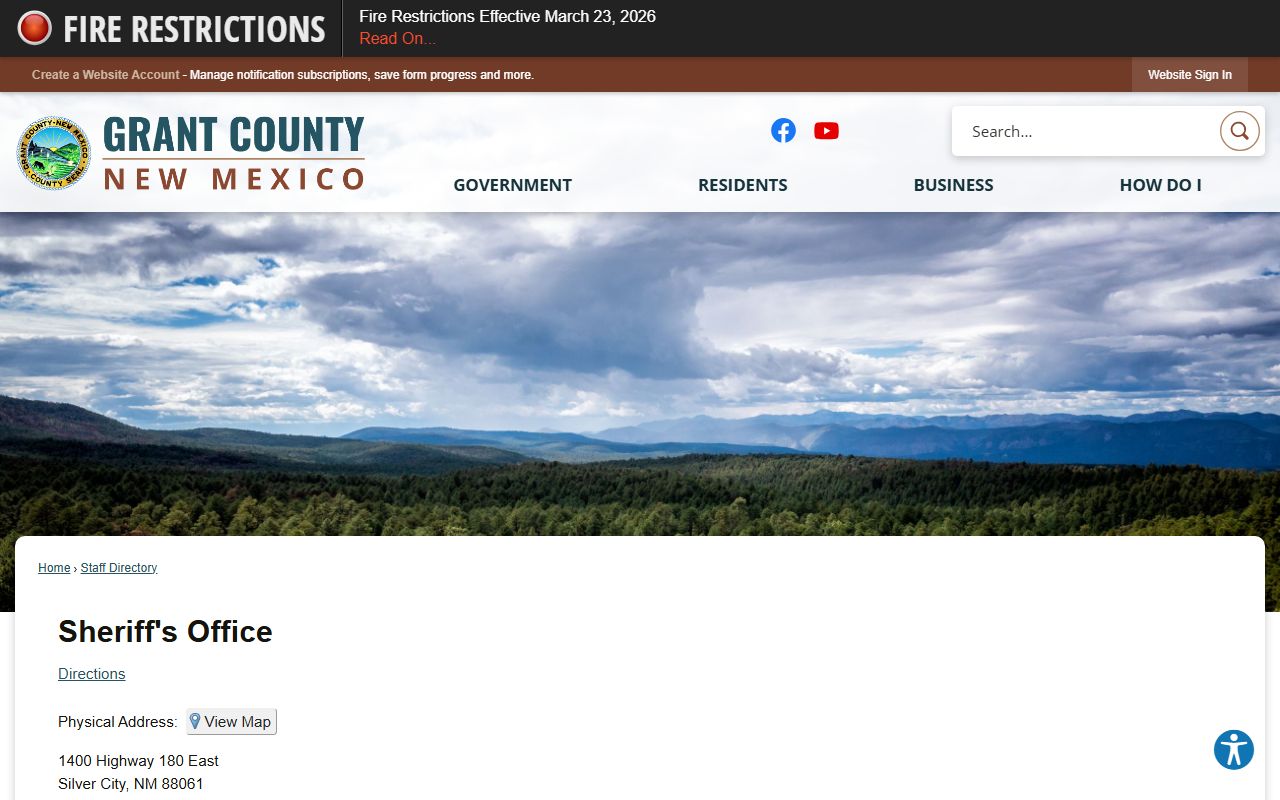
The directory supports routing, while court status and filed charges still need the court or Case Lookup path.
Restricted Grant County Charge Records
Public access to Grant County arrest records and court charges is limited by record type. New Mexico IPRA supports access to public records unless an exception applies, but law-enforcement records, court records, prosecutor files, juvenile records, protected identifiers, sealed records, and expunged records are handled under different rules. A prosecutor file is not a public copy of the court file. It may include work product, law-enforcement material, victim or witness information, and charging decisions that are not simply released as court records.
Juvenile and children's court records are confidential under the Children's Code, and Case Lookup does not display juvenile criminal cases. Criminal expungement under NMSA 1978, Sections 29-3A-1 through 29-3A-7 can remove qualifying arrest, charge, and conviction records from general public access. Expungement petitions may require notice to the District Attorney, Department of Public Safety, and the arresting agency. DWI/DUI convictions and several serious categories have exclusions.
Important: A booking charge, arrest entry, or filed charge is not proof of conviction without the final court disposition.
Note: Requests for a custom summary of all charges may be denied because agencies do not have to create new records under IPRA.